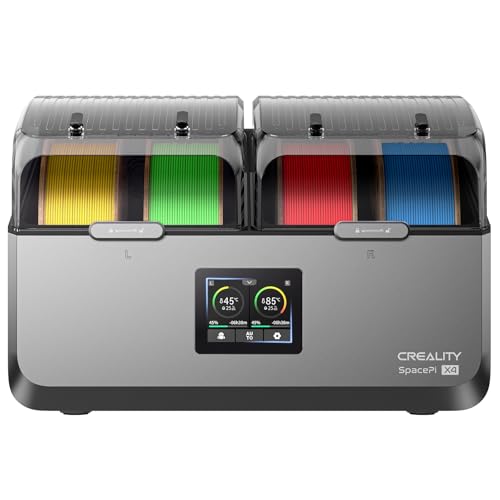
The original SUNLU S4 and Creality SpacePi X4 both target four-spool workflows, but their control arrangements differ. The S4 shares one temperature setting and reaches 70°C; the X4 has two independently controlled chambers and an advertised 85°C maximum. The practical question is whether your simultaneous jobs need different supported processes.
Start with the material schedule
Write each planned spool on a separate line with its manufacturer-required preparation process. Group only compatible instructions together. If all four spools use the same supported conditions, a shared chamber may be sufficient. If your normal schedule mixes different temperature requirements, separate chambers can reduce scheduling conflicts.
This is where the X4’s layout may matter more than its headline spool count. It can accommodate two different chamber settings at once. That remains two zones, not four independently adjustable spool positions. Spools sharing either chamber still need mutually compatible material and carrier limits.
Understand which S4 is being compared
This article covers the original FilaDryer S4. The S4 Pro is a distinct model with a different temperature range and chamber arrangement. Do not compare an original S4 marketplace listing against S4 Pro marketing and assume the hardware is equivalent.
Keep model names visible in your shortlist and check the selected listing variant before purchasing. If a product photo or specification describes independent chambers, confirm the device identity. Clear model matching prevents a technically accurate feature from being attributed to the wrong product when names differ by only a short suffix.
Match the temperature ceiling to a real requirement
The additional X4 range is useful when the exact filament instruction calls for a supported temperature above the original S4’s ceiling. It is not a reason to raise the settings for every material. Both the polymer and its spool must tolerate the selected process.
Also recognize the remaining limit: an 85°C maximum does not satisfy a documented 90°C or 100°C drying requirement. Do not treat the word engineering in marketing as universal nylon compatibility. Start with the filament specification, then identify the dryer that can follow it; reversing that order encourages unsupported compromises.
As an Amazon Associate, we earn from qualifying purchases. Buying through our links may earn us a commission.
Comparing equipment? Review the documented limits before buying.
View SUNLU S4 on Amazon ↗A relevant option to investigate, not a diagnosis or a universal recommendation.
Treat fit and moisture handling as separate checks
For four-spool loading, obtain the correct layout rather than dividing total chamber dimensions by four. A maximum width intended for a single larger spool is not proof that four such spools fit simultaneously. Include adapters and clearances when checking the configuration you will actually use.
SUNLU documents circulation and humidity-triggered operation for the S4; Creality describes active exhaust and moisture-management features for the X4. Those are design features, not our measured performance results. A lower displayed relative humidity on one machine does not establish that its spool contains less moisture than the other machine’s spool.
Make the final choice around scheduling flexibility
The original S4 is a coherent shortlist choice when several compatible spools share one preparation routine. The X4 is more compelling when two supported cycles need to run simultaneously or a specific requirement uses its additional temperature range. Confirm whether either advantage appears in your ordinary projects.
Check included feeding accessories, available workspace, the exact revision, and the operating manual before ordering. Creality notes that PTFE tubing is not included with the X4 on its product page, so verify the package you select. This comparison makes a documented workflow distinction; it does not claim one machine is quieter, more uniform, or faster without matched measurements.
Sources and research notes
This guide synthesizes published guidance. It does not describe our own laboratory or hands-on product testing. Material instructions apply to the named manufacturer and grade.