
SUNLU / DRYING
SUNLU S4
A four-spool station with one shared temperature setting, circulation fans, and humidity-controlled operation.
4 spoolsUp to 70°C
Check on Amazon Details & tradeoffsTHE RIGHT EQUIPMENT FOR THE JOB
Compare dryers for everyday materials, with the temperature and storage checks that make the choice useful.
Check my requirements ↗CHECK / 01
Look up the exact brand and grade before setting a drying temperature. PLA and PETG do not share a universal preset.CHECK / 02
Check the spool itself: a filament may tolerate more heat than the reel carrying it.CHECK / 03
A sealed dry box helps maintain condition after drying. It does not automatically restore a wet spool.As an Amazon Associate, we earn from qualifying purchases. Buying through our links may earn us a commission.
SUNLU / DRYING
A four-spool station with one shared temperature setting, circulation fans, and humidity-controlled operation.

SUNLU / DRYING
A single-spool dryer with a 70°C ceiling and a documented 210 ×85mm reel envelope. Check the fan-equipped revision.

Creality / DRYING
A two-spool hot-air dryer for keeping two rolls ready at one shared temperature.
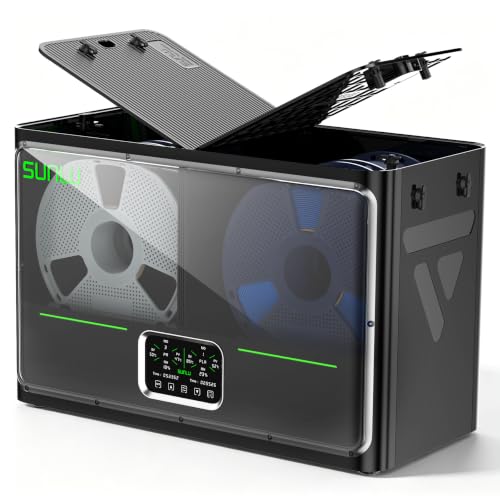
SUNLU / DRYING
Two independently controlled chambers let four spools share a station while using different drying settings.
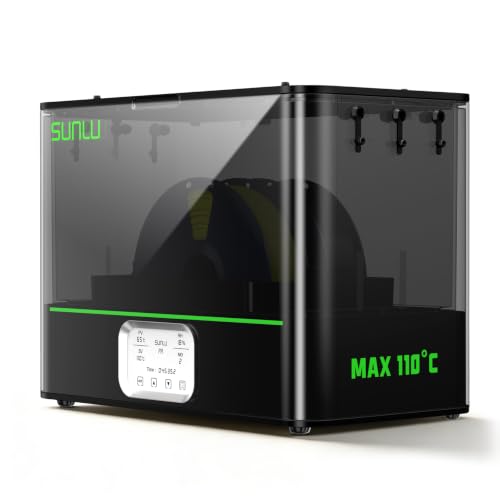
SUNLU / DRYING
A higher-temperature dryer reaching 110°C for named engineering grades whose datasheets call for more heat.

SUNLU / DRYING
A compact single-spool starting point with a 55°C ceiling. Match that limit to your exact filament.

Creality / DRYING
A single-spool PTC hot-air dryer with an adjustable 45–70°C range.

Creality / DRYING
A smaller single-spool dryer with a 65°C ceiling and a relatively tight 190 ×68mm reel envelope.
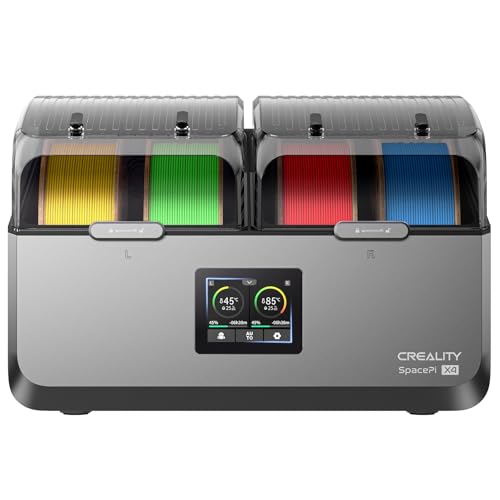
Creality / DRYING
A four-spool station with two independent heated chambers, active exhaust, and an 85°C ceiling.

Polymaker / DRYING
A detachable dry dock and sealed box combine active drying with storage that stays with the spool.
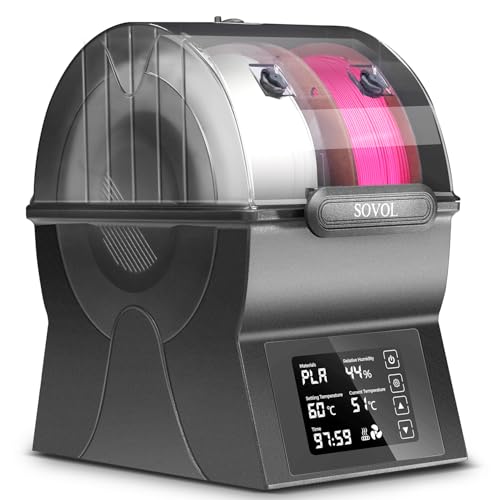
Sovol / DRYING
A two-spool PTC dryer reaching 70°C, with a documented two-reel layout of 200 ×70mm per spool.

EIBOS / DRYING
A two-spool rotating dryer in the verified 80°C temperature variant, with humidity control and adjustable exhaust.

EIBOS / DRYING
A single-spool 40–65°C dryer whose reel and hub dimensions deserve a careful fit check.

Comgrow / DRYING
Four-spool capacity in two independent chambers, with a 45–85°C range and automatic vents.
Start with the named filament rather than a generic material preset. A dryer belongs on the shortlist only when its adjustable range includes the complete procedure for the spool in hand.
Capacity is the second decision. A compact dryer can suit one occasionally exposed spool; a shared multi-spool chamber is useful only when every loaded material can use the same setting. A higher maximum temperature alone is not a quality ranking.
Open the product details and review the limitations, then check the current retailer listing for the exact revision, included parts, seller, and return terms. Specifications here come from published sources, not independent performance measurements. Where a dimension or capability could not be established, it stays unknown.
Our Finder separates documented temperature and capacity matches from products that require more verification. It does not certify safety or diagnose a printer. If moisture symptoms continue after following the maker’s drying procedure, investigate print settings and feed resistance as separate variables.
How we compare products · Manufacturer drying reference · All collections