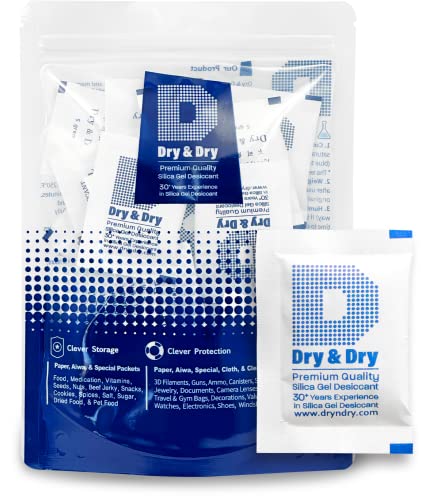
Filament desiccant manages moisture in the air of a closed storage system; it does not prove that water already absorbed by a spool has been removed. Choose packets, contained loose beads, or a model-specific cartridge only after checking the enclosure instructions. Regenerate a product only by its own documented method, because bead chemistry, indicator colors, wrappers, holders, and equipment limits are not interchangeable.
Choosing a format? Compare active AMS upgrades, loose beads, packets, and air monitors in the accessories collection. Build the enclosure routine in the storage guide, then use the humidity diagnostic when an air reading does not change as expected.
What can filament desiccant do—and what can it not do?
Use desiccant after a spool is prepared and inside an enclosure that closes as intended. Its job is to reduce moisture exposure in the enclosed air and slow re-absorption between prints. It is not a substitute for a supported active-drying procedure when the filament itself is already causing moisture-related trouble.
A humidity display reports air near its sensor, while an indicator bead reports the condition of that exact desiccant product. Neither reading measures water inside the wound filament. Treat storage condition, desiccant condition, and spool preparation as three separate observations instead of turning one color or one relative-humidity number into a universal dryness test.
Choose packets, loose beads, or a model-specific holder
Packets keep the material contained and are easy to distribute across storage bags or boxes, but the packet wrapper is part of the product. Do not assume a packet can tolerate an oven, microwave, or heated dryer because loose silica gel from another brand can. Replace or regenerate it only when its own instructions say to do so.
Loose beads need a compatible holder that retains the actual bead size and stays clear of the reel, filament path, seals, fans, heaters, and sensors. A model-specific cartridge or tray must match the exact system and replacement procedure. Bambu and Creality publish maintenance pages for particular enclosed feeding systems; those instructions do not automatically apply to a different AMS, CFS, dry box, or homemade holder.
Keep the indicator reference with the exact product
If a desiccant changes color, save the maker's dry and saturated color reference with the refill container. Indicator colors and first-batch revisions can differ. Polymaker currently says its PolyDryer desiccant is orange when dry and dark green when wet, while warning that the first production batch used different colors. That is a PolyDryer-specific example, not a rule for every orange or indicating silica gel product.
Photograph the packaging before discarding it and label the product, holder, installation date, dry color, service color, and supported next step. Age alone is not a condition test: a frequently opened container and a rarely opened archive expose desiccant differently. Check the seal and the maker's indicator or replacement method rather than inventing a calendar interval.
Can you dry desiccant beads in a filament dryer?
Only when the exact desiccant and equipment instructions support that use. A filament dryer's material presets do not establish safe regeneration conditions for loose beads, packets, a printed holder, or a cartridge. If the desiccant documentation gives no supported method—or the dryer documentation does not permit the load—replace the product or ask the manufacturer instead of borrowing a temperature from another brand.
Polymaker provides a narrow worked example for its own system: put an empty PolyDryer Box on the Dry Dock, use power level 3 for about eight hours, orient the desiccant on the same side as the Dry Dock screen, and continue until the specified dry color returns. Those are PolyDryer instructions. Do not transfer its color, time, equipment, or handling steps to the three Amazon desiccant listings on this site; exact first-party regeneration evidence for those products has not been established.
As an Amazon Associate, we earn from qualifying purchases. Buying through our links may earn us a commission.
Compare the accessory role and evidence boundary before opening a retailer listing.
Compare accessory roles →The three desiccant records are listing identities, not independently tested recommendations, and remain excluded from indexing.
Use a four-gate regeneration decision
Gate 1: identify the exact desiccant product and revision. Gate 2: confirm that its maker permits regeneration and names the condition that triggers it. Gate 3: confirm that the wrapper, holder, or cartridge is removed or retained exactly as instructed. Gate 4: use only equipment that supports the documented load and procedure. If any gate is unresolved, replacement is the defensible path; an undocumented cycle is not.
Record the source URL and review date with the method because instructions can change. Stop using a damaged, leaking, discolored beyond its stated range, or otherwise questionable packet or holder and follow its product handling guidance. Do not place loose beads where they can enter a fan, heater, sensor, reel bearing, tube, or filament path.
Separate enclosure maintenance from spool preparation
Keep one record for the enclosure and another for each spool. A desiccant replacement or regeneration applies to the container; an active-drying cycle belongs to the named filament, reel, equipment, setting, and duration. This matters when several spools share one box and only one later shows printing symptoms.
After servicing the desiccant, close unused ports, inspect seals and valves, allow the air reading to stabilize as the sensor maker directs, and note any opening or leak you corrected. If a known wet spool still needs preparation, move to the manufacturer drying reference rather than waiting for passive desiccant to perform an undocumented active cycle.
If service intervals are short, investigate the enclosure
Repeatedly exhausted desiccant is a reason to inspect the lid, gasket, valves, feed-throughs, unused openings, and handling routine. Compare that container with another used in similar conditions. Clear exterior labels reduce unnecessary opening; a compatible spare lets you complete maintenance without leaving the box open while searching for instructions.
Do not respond by adding an arbitrary mass of desiccant or chasing an unsupported universal humidity threshold. Container volume, leakage, exposure, temperature, sensor limits, desiccant type, and the stored load all affect the observed result. Fix the verified enclosure problem, then judge the exact desiccant by its own indicator or replacement guidance.
Sources and research notes
This guide synthesizes published guidance. It does not describe our own laboratory or hands-on product testing. Desiccant instructions apply only to the named product, revision, holder, and equipment.