ASA and ABS do not share one safe drying preset. Start with the exact product and its current condition, then keep the manufacturer's temperature, duration, method, and reel requirements together. Two documented examples show the practical split: Prusament ASA uses 80°C for four hours, while PolyLite ABS lists 70°C for six hours only after moisture absorption. Those values belong to the named products, not every ASA or ABS spool.
Check the named rows in the manufacturer drying reference, compare equipment that reaches an exact requirement in the high-temperature collection, and screen temperature plus reel dimensions in the Dryer Finder.
Do ASA and ABS need drying before every print?
Do not turn the material-family name into an automatic drying schedule. Find the exact manufacturer, product line, modifiers, diameter, reel, and current technical instructions first. The applicable source may tie drying to a known condition rather than every print: Polymaker's PolyLite ABS page specifies its 70°C, six-hour cycle when the filament has absorbed moisture.
Exposure history and a controlled print comparison can support the decision, but they do not create a universal humidity threshold or calendar. If the label, product page, and technical sheet do not establish the procedure for the spool in hand, leave the setting unresolved and ask the manufacturer instead of borrowing a number from another ASA or ABS grade.
Compare two named products, not two polymer averages
Prusa's current drying table pairs Prusament ASA with 80°C for four hours. Polymaker's current PolyLite ABS product page and technical sheet pair that named ABS with 70°C for six hours after moisture absorption. The ten-degree difference changes which dryers can perform the documented process, even though both materials are often grouped together in shopping pages.
Keep each pair intact. Do not give every ASA spool the Prusament setting, give every ABS spool the PolyLite setting, shorten one cycle because a chamber can run hotter, or invent extra time at 70°C as a substitute for an 80°C instruction. Verify the complete procedure and method in the current source before loading the reel.
- Prusament ASA: 80°C for four hours in Prusa's named drying table.
- PolyLite ABS: 70°C for six hours after moisture absorption in Polymaker's named product guidance.
- Unknown ASA or ABS grade: find product-level instructions before selecting either example.
Handle Polymaker ASA's six-versus-seven-hour conflict
Polymaker's ASA product page does not currently give one consistent duration. Its Print Settings section says 70°C for six hours after moisture absorption, while the Technical Specs section and linked V5.4 technical data sheet say 70°C for seven hours. A separate four-hour note describes a limited brief-exposure case, so it should not be merged with the unresolved six-versus-seven-hour instruction.
This site therefore excludes Polymaker ASA from the selectable drying reference. Do not average the durations or silently choose one. Check the current documentation for your exact product and ask Polymaker which instruction governs your condition and method when the discrepancy remains. An explicit conflict is a reason to pause, not an empty field to fill with a convenient preset.
Will a 70°C dryer cover both examples?
No. A dryer whose documented adjustable range reaches 70°C can clear the temperature requirement in the named PolyLite ABS example, subject to its timer, load, mode, reel, and operating instructions. The same machine falls ten degrees short of Prusament ASA's 80°C procedure. A compatibility badge or longer guessed cycle does not close that numeric gap.
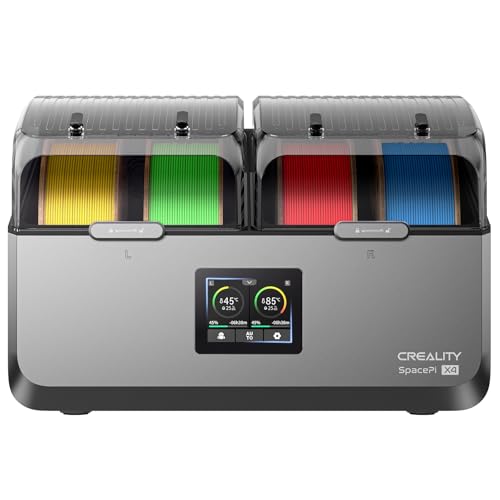
An 80°C-capable model passes the first temperature screen for both examples, but temperature alone does not prove suitability. Confirm that the timer supports the full duration, the intended mode is documented, the loaded reel fits and rotates as required, and the manufacturer permits the complete arrangement. Use the high-temperature collection for model capability comparisons rather than treating this material guide as a blanket product ranking.
As an Amazon Associate, we earn from qualifying purchases. Buying through our links may earn us a commission.
Comparing equipment? Review the documented limits before buying.
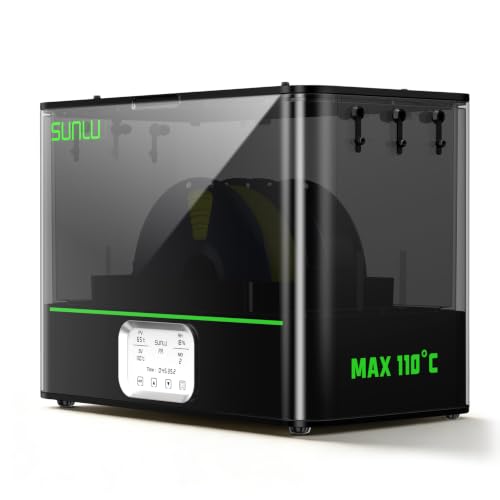
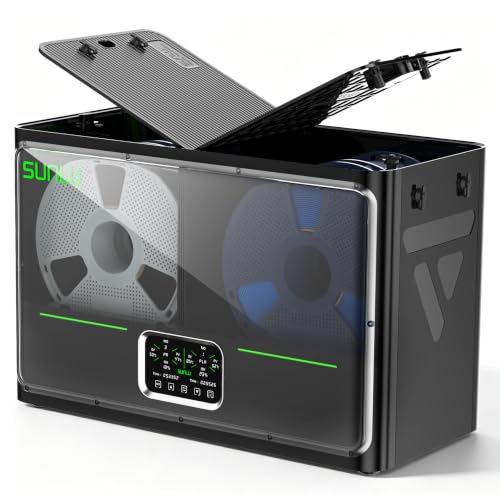
View SUNLU E2 on Amazon ↗A relevant option to investigate, not a diagnosis or a universal recommendation.
Verify the reel separately from the filament
The filament's drying instruction does not establish the carrier's heat tolerance. Prusa says its redesigned black spool introduced from October 2025 tolerates drying temperatures up to 90°C. Its older black spool needs the documented screw preparation above 45°C, while the older grey spool is usable up to 90°C and the newer grey PEI spool up to 150°C. Identify the actual generation; the brand name alone is not enough.
A refill carrier, printed adapter, replacement reel, or respool needs its own supported limit. Polymaker's sources used here do not establish one numeric carrier-spool heat limit for every relevant load, so that field remains unknown rather than inferred. Check temperature tolerance alongside diameter, width, loading position, free rotation, and required clearances before heating.
Separate moisture preparation from print diagnosis
After the supported cycle, repeat one print that exposed the original symptom while holding other variables stable. Record whether the chosen symptom improved, stayed unchanged, or worsened. Drying can address moisture exposure, but it does not promise to fix warping, layer separation, temperature tuning, enclosure conditions, cooling, extrusion, or feed resistance.
Keep drying temperature distinct from nozzle, bed, chamber, annealing, and finished-part heat-resistance values. If the result is unchanged, investigate printer and material settings rather than escalating heat without evidence. Move the prepared spool into storage that matches the manufacturer's instructions so the next decision starts with a known exposure history.
Sources and research notes
This guide synthesizes published guidance. It does not describe our own laboratory or hands-on product testing. Material instructions apply to the named manufacturer and grade.